Need help? Call Us Now : (626) 869-2151

National Social Work Month: The Compassionate Role of Hospice Social Workers | Faith and Hope Hospice
March 12, 2026
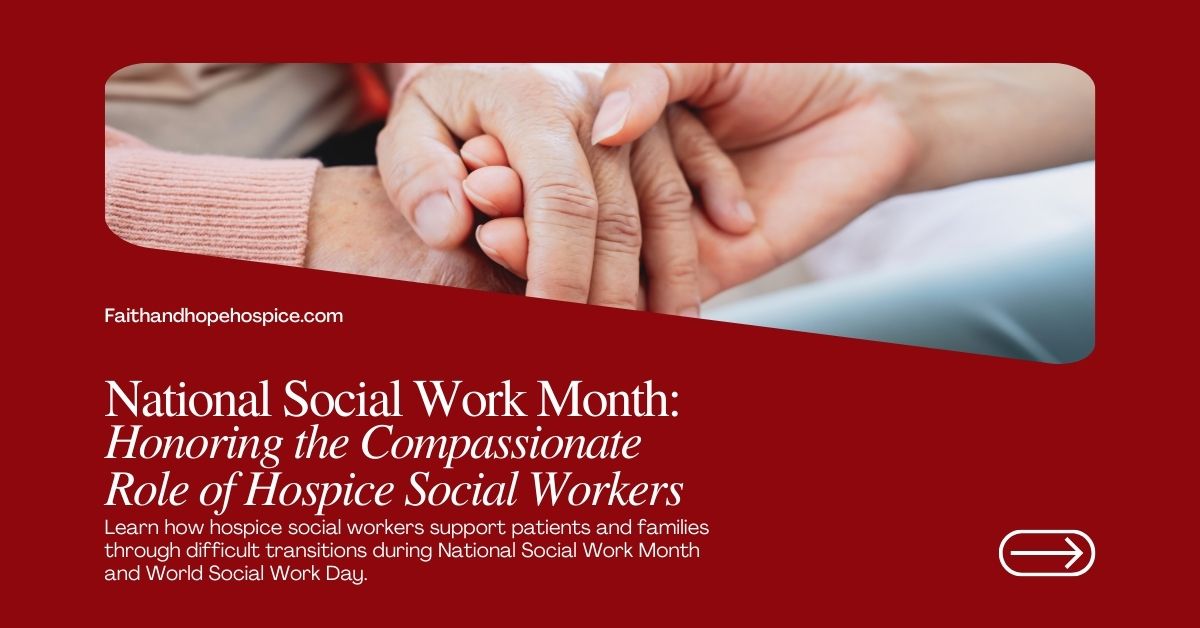
Every March, healthcare organizations across the country recognize National Social Work Month, a time dedicated to honoring the compassion, dedication, and impact of social workers in communities and healthcare systems. During this month, professionals in hospice care take a moment to highlight the vital role hospice social workers play in helping patients and families navigate life’s most difficult transitions.
At Faith and Hope Hospice, social workers are an essential part of the hospice care team. They provide emotional guidance, practical resources, and compassionate support that helps families find clarity and comfort during challenging moments.
Another meaningful recognition during the month is World Social Work Day, celebrated annually in mid-March. This global observance shines a light on the extraordinary work social workers perform in supporting individuals and families through complex life situations.
For hospice patients and their loved ones, social workers often become trusted guides during one of the most emotional journeys a family can experience.
The Role of Social Workers in Hospice Care
Hospice care focuses on comfort, dignity, and emotional wellbeing. Social workers help ensure that these goals extend beyond medical care to support the entire family.
When patients enter hospice care, families may feel overwhelmed by changing medical circumstances, emotional stress, and uncertainty about what lies ahead. Hospice social workers help families navigate these experiences with empathy and practical guidance.
Social workers often help patients and families with:
- Emotional counseling and support
- Guidance through difficult healthcare decisions
- Communication between patients, families, and medical teams
- Assistance accessing community resources
- Support for caregivers experiencing stress or burnout
These professionals bring a unique blend of emotional insight and practical knowledge that helps families feel supported during uncertain times.
Families experiencing the emotional challenges that come with serious illness may also relate to the concept of anticipatory grief, which is explored further in Anticipatory Grief: Understanding the Emotions Before a Loss Occurs.
Helping Families Navigate Difficult Transitions
Serious illness often brings changes that families may not fully understand or expect. As conditions evolve, patients and families may face new medical decisions, emotional challenges, and difficult conversations.
Hospice social workers help families understand these changes and prepare for what lies ahead. By providing compassionate guidance, they help families process emotions while ensuring they feel informed and supported.
Social workers are especially helpful when families need assistance adjusting to changing care needs. They can explain what hospice care involves and help families feel more comfortable with the transition from curative treatment to comfort-focused care.
Families who want to understand this process more deeply may also find helpful insights in How Hospice Supports Families Through Changing Medical Needs.
Supporting Caregivers Through the Hospice Journey
Caregivers often carry a tremendous emotional and physical responsibility when caring for a loved one with a serious illness. Social workers play an important role in helping caregivers manage stress, find balance, and access helpful resources.
They offer reassurance, listen without judgment, and provide strategies to help caregivers navigate the emotional challenges that may arise throughout the hospice journey.
Hospice care recognizes that caregivers need support as well. The important role caregivers play is explored further in Caregivers Need Care Too – Recognizing the Heart of Hospice Support.
By supporting caregivers, social workers help strengthen the entire care environment for patients and families.
Creating Space for Meaningful Conversations
One of the most valuable contributions hospice social workers provide is their ability to facilitate meaningful conversations. Patients and families often need guidance when discussing sensitive topics such as care preferences, fears, hopes, and emotional concerns.
Social workers help create a safe space where these conversations can happen with compassion and understanding.
These conversations often allow families to strengthen connections and reflect on what matters most during this time together.
The importance of these emotional connections is also reflected in Love, Dignity, and Connection – What Valentine’s Day Means in Hospice Care.
Why National Social Work Month Matters
Recognizing National Social Work Month provides an opportunity to celebrate professionals whose work often happens quietly behind the scenes. Social workers dedicate their careers to supporting individuals during vulnerable moments, advocating for families, and helping people access the care they need.
In hospice care, their presence can bring comfort and reassurance during a time when families may feel overwhelmed or uncertain.
World Social Work Day further highlights the global importance of social work in strengthening communities and supporting individuals through life’s most complex challenges.
These recognitions remind us how important compassion, empathy, and human connection are in healthcare.
Compassionate Guidance When Families Need It Most
Hospice care is not only about managing physical symptoms—it is also about supporting emotional wellbeing for both patients and their families. Social workers play an essential role in making that possible.
At Faith and Hope Hospice, hospice social workers help families navigate uncertainty with compassion, dignity, and understanding. Through counseling, guidance, and practical support, they ensure families never feel alone during the hospice journey.
As we recognize National Social Work Month and World Social Work Day, it is an opportunity to honor the remarkable professionals whose dedication helps families find comfort, connection, and peace during life’s most meaningful moments.
Get In Touch With One Of Our Knowledgeable Advisors
We are ready to help you or a loved one during the end of life process by creating a fully customized care plan.