Need help? Call Us Now : (626) 869-2151

Honoring Hospice Nurses in Los Angeles | Faith & Hope Hospice
May 14, 2026
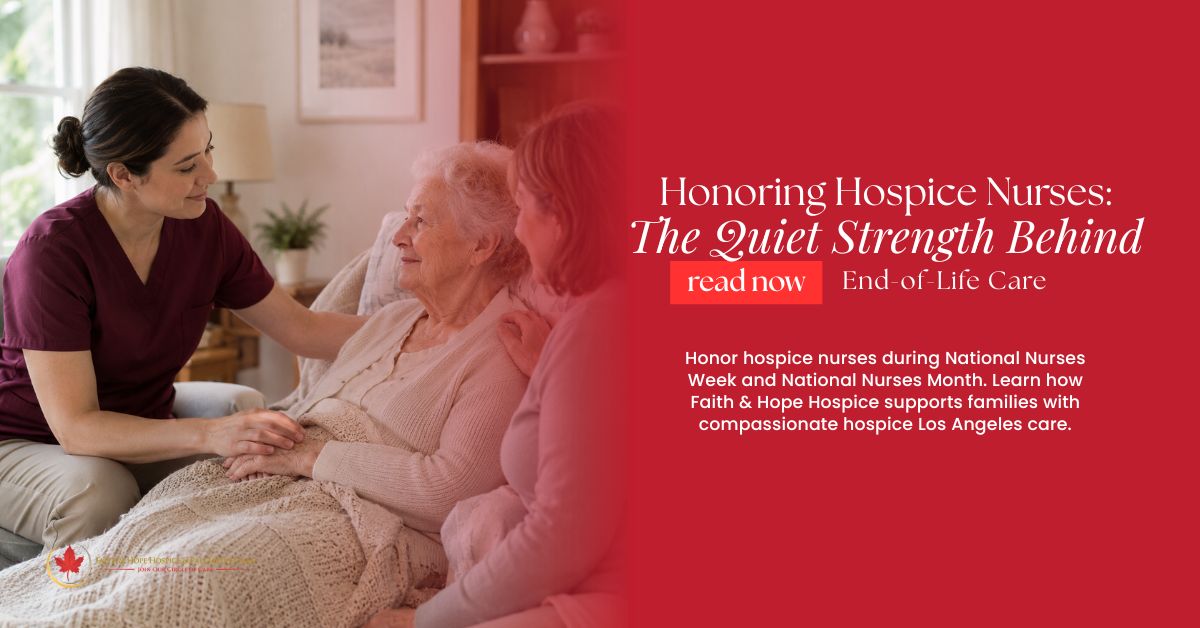
National Nurses Week and National Nurses Month are meaningful times to recognize the people who bring comfort, clarity, and steady support to patients and families during some of life’s most emotional moments.
In hospice care, nurses do far more than provide medical support. They educate families. They watch for changes. They help manage symptoms. They explain what may happen next. They bring calm into situations that can feel overwhelming.
For families searching for hospice Los Angeles care, the role of a hospice nurse is often one of the most important parts of the entire experience. A hospice nurse becomes a trusted guide, helping loved ones understand what comfort-focused care looks like and how to support the patient with dignity.
At Faith & Hope Hospice, hospice nurses are part of a compassionate care team dedicated to helping patients remain as comfortable as possible wherever they reside, whether that is at home, in a skilled nursing facility, assisted living community, board and care, memory care setting, or another family-chosen care environment.

Hospice Nurses Help Families Understand What Is Happening
When a loved one enters hospice, many families feel unsure about what to expect. They may wonder whether certain symptoms are normal, how medications should be used, when to call for help, or how to know if the patient’s needs are changing.
Hospice nurses help answer those questions.
They explain care in a way families can understand. They help reduce confusion. They provide guidance during moments when emotions are high and decisions feel difficult.
This is especially important during the first few days and weeks of hospice. Families are often adjusting to new routines, new medications, new equipment, and new conversations. That is why resources like What Families Should Expect During the First Weeks of Hospice Care can help families feel more prepared before and after hospice begins.
Hospice nurses do not just care for the patient. They also help the family understand the care plan.
Nurses Are Comfort Guides
Hospice care focuses on comfort, dignity, and quality of life. Hospice nurses are central to that mission.
They help monitor pain, breathing changes, restlessness, weakness, appetite changes, and other symptoms that may appear as an illness progresses. Their goal is not to overwhelm families with clinical language, but to help them understand what is happening and what can be done to keep the patient comfortable.
A hospice nurse may help families understand:
- How to recognize signs of discomfort
- When symptoms may need attention
- How medications are used for comfort
- What physical changes may occur over time
- When to call the hospice team for support
- How to make the patient’s environment calmer and safer
This kind of guidance matters. Families often want to do the right thing, but they may not know what the right thing looks like in end-of-life care. Hospice nurses help bring confidence and calm into those moments.
Hospice Nurses Watch for Changes Families May Miss
When a family is caring for someone they love, it can be hard to notice small changes. Sometimes the decline happens slowly. Other times, changes happen quickly.
Hospice nurses are trained to observe physical, emotional, and comfort-related changes that may not be obvious at first. They can help identify when symptoms are shifting, when medication adjustments may be needed, or when the care plan should be updated.
This does not mean families are expected to become medical experts. That is the point of hospice support.
The nurse helps carry that responsibility with the family so they are not left guessing on their own.
For families researching Los Angeles hospice, this is one of the most valuable parts of choosing the right hospice provider. A strong hospice team helps families feel supported before a crisis happens, not only after one begins.
Nurses Provide Emotional Support, Too
Hospice nurses often enter the home or care setting during deeply emotional moments. Families may be tired, grieving, anxious, or uncertain. They may be trying to stay strong for the patient while quietly carrying fear or sadness themselves.
A hospice nurse brings more than clinical knowledge. A good hospice nurse brings presence.
Sometimes that means answering hard questions. Sometimes it means listening. Sometimes it means gently explaining that a change is part of the natural process. Sometimes it means helping a family member feel less alone.
This emotional support can be just as meaningful as the medical support.
Hospice nurses help families understand that comfort care is not giving up. It is choosing care that honors the patient’s needs, dignity, and peace.
Nurses Help Families Communicate
End-of-life care often brings difficult conversations. Families may need to talk about comfort, medications, changing needs, spiritual concerns, final wishes, or what the patient would have wanted.
Hospice nurses can help make those conversations easier by explaining what is happening in clear, compassionate language.
They can also help families communicate with other members of the hospice team, including physicians, home health aides, social workers, chaplains, and volunteers when appropriate.
Hospice care works best when everyone understands the plan. Nurses often help connect the pieces.
The Hospice Nurse Is Part of a Larger Care Team
Hospice nurses play a major role, but they are not alone. Hospice care is team-based.
Depending on the patient’s needs and eligibility, hospice support may include nursing care, physician oversight, home health aide support, medical social work, spiritual care, volunteer companionship, medication coordination, medical equipment coordination, and 24/7 on-call support.
It is also important for families to understand what hospice does and does not provide. Hospice provides scheduled visits and 24/7 on-call support, but it does not replace full-time caregiving or provide continuous 24-hour custodial care in the home. The hospice team supports the patient and family, while family members or other caregivers remain involved in day-to-day care.
This distinction helps families make informed decisions and plan properly.
Why Hospice Nurses Matter So Much in Los Angeles
Families in Los Angeles often face many choices when looking for hospice care. They may be comparing providers, trying to understand Medicare coverage, coordinating with a facility, or deciding whether the time is right to begin hospice.
In a large and busy region, families need care that feels personal.
That is where hospice nurses make such a difference. They bring the care plan into real life. They help families understand what is happening today, what may happen next, and how to respond with compassion.
The article Hospice Los Angeles: Why Choosing the Right Care Matters More Than Ever explains why choosing the right hospice provider can make a meaningful difference for families navigating end-of-life care.
For Faith & Hope Hospice, the goal is to provide care that feels supportive, respectful, and centered on the patient’s comfort.
Honoring Hospice Nurses During National Nurses Week
National Nurses Week is a reminder to pause and appreciate the nurses who serve patients and families every day.
Hospice nursing requires skill, patience, compassion, and emotional strength. These nurses step into moments most people find difficult. They help families face uncertainty with more clarity. They help patients experience comfort with dignity. They help loved ones feel less alone.
Their work is quiet, but its impact is lasting.
A hospice nurse may not always be the loudest presence in the room, but often, they are the steady one. The one who explains. The one who notices. The one who reassures. The one who helps a family breathe during a difficult moment.
That kind of care deserves recognition.
When Families Should Reach Out
Families do not have to wait until they feel completely overwhelmed to ask questions about hospice. If a loved one has an end-of-life illness and care needs are becoming harder to manage, it may be time to learn what hospice support can provide.
Common signs that a family may need to start the conversation include:
- Frequent hospital visits or emergency calls
- Increased pain, discomfort, or weakness
- Difficulty managing medications or symptoms
- Noticeable decline in appetite, mobility, or alertness
- Caregiver exhaustion
- Uncertainty about what the patient needs next
- A desire to focus more on comfort and quality of life
Hospice eligibility depends on the patient’s condition and physician evaluation. A serious illness alone does not automatically mean someone qualifies, but asking questions early can help families understand their options before a crisis occurs.
FAQ: Hospice Nurses and Family Support
What does a hospice nurse do?
A hospice nurse helps monitor the patient’s comfort, explains physical changes, provides medication and symptom guidance, and supports the family through the care process. Hospice nurses also help families know when to call for help and what to expect as the patient’s needs change.
Do hospice nurses provide 24-hour care in the home?
Hospice provides scheduled visits and 24/7 on-call support, but it does not provide continuous 24-hour caregiving in the home. Day-to-day care is still provided by family members, hired caregivers, or facility staff, depending on where the patient resides.
When should a family call hospice?
A family should consider calling hospice when a loved one has an end-of-life illness and is experiencing increased pain, weakness, frequent hospital visits, difficulty managing symptoms, declining appetite, or caregiver exhaustion. Hospice eligibility depends on the patient’s condition and physician evaluation.
Do hospice nurses only care for the patient?
No. Hospice nurses support both the patient and the family. They help families understand the care plan, recognize changes, manage comfort-related concerns, and feel less alone during a difficult time.
Can hospice care be provided outside the patient’s home?
Yes. Faith & Hope Hospice provides care wherever the patient resides, including a private home, skilled nursing facility, assisted living community, board and care, memory care setting, or another family-chosen care environment.
Faith & Hope Hospice: Compassionate Support for Families
Faith & Hope Hospice is honored to recognize the hospice nurses who bring comfort, guidance, and compassion to patients and families across Los Angeles County and surrounding communities.
For families looking for hospice nurses Los Angeles support, the right hospice team can make a difficult season feel less confusing and less isolating.
Hospice nurses help families understand care. They help patients remain comfortable. They help loved ones feel supported through changing needs. Most importantly, they help preserve dignity during one of life’s most sensitive transitions.
If your family is beginning to ask whether hospice may be the right next step, Faith & Hope Hospice is here to help you understand the process, ask the right questions, and receive compassionate care centered on comfort, dignity, and peace.
Get In Touch With One Of Our Knowledgeable Advisors
We are ready to help you or a loved one during the end of life process by creating a fully customized care plan.